A blizzard is whipping the house, it's effectively 4 degrees below zero outside with the wind chill, and the family and I are relaxing. We don't have to be on the roads, and there's plenty of food to keep us fed for a couple weeks.
Not so long ago I was one of those people who rushed to the supermarket the day before a major storm (or even after the deluge of flakes started) to grab what I could for the next couple of days.
Since then, I've learned to keep some staples in the kitchen, not because Mother Nature might trap me at home but because having a full pantry makes life easier. (And, yes, when a storm blasts in, I don't have to rush to the supermarket to scavenge supplies.)
When I'm not inspired to make anything particular or I haven't had time to do my regular shopping I can still have a good meal. Sometimes it's a burrito stuffed with beans, rice and leftover meat or vegetables; sometimes it's a pasta salad bright with lemon vinaigrette and roasted red peppers; sometimes it's soup. Homemade soup tastes better than the stuff sold in cans, and even a non-cook can make it pretty easily. A bonus is it's more healthful.
Just yesterday the U.S. Department of Agriculture and Department of Health and Human Services announced the new Dietary Guidelines for Americans, saying that we as a nation need to eat fewer calories, less salt, less added sugars, and more vegetables, fruits and whole grains. When it comes to salt, processed foods, especially most ready-to-eat soups, are big offenders.
Not only do most canned soups contain a lot of sodium per serving, the serving size printed in small type on the back of the can doesn't reflect what people normally consume. For instance, those microwavable bowl-like containers of soup that people take to work look like a single serving. One "bowl," one serving, right? Nope. But who eats just half or shares the bowl with a co-worker? So when figuring the amount of sodium you get from one of those, you may as well double the number on the label, which means you've consumed more than 800 milligrams in a low-sodium soup, or more than 1500 milligrams in a bowl of regular soup, exceeding some people's recommended maximum for an entire day under the USDA guidelines.
 |
| You can control the salt. |
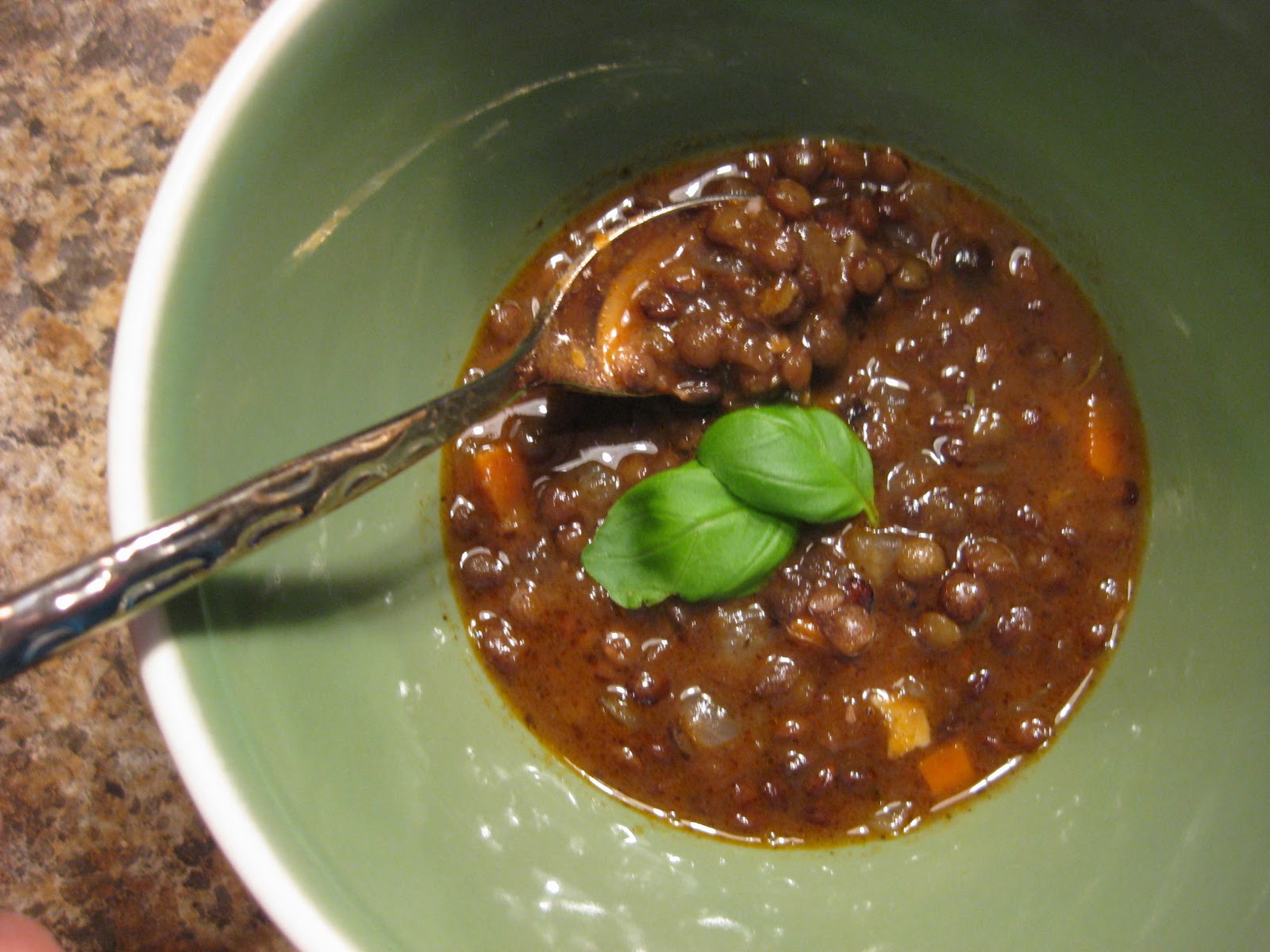
Last night, we had lentil soup (very similar to my lentil stew) with braised lamb shanks, which give a wonderful flavor to the soup. If I weren't using the lamb shanks, I'd probably brown some sausage (merguez or chorizo would work), good bacon or pancetta and use that as the meat component. Or you could skip the meat and use vegetable stock in place of water. Except for the lamb, all the ingredients are things I keep on hand.
Among the things I nearly always have: dried split peas and lentils (green and red), canned and dried beans, noodles, rice, all-purpose flour, canned fish (sardines, tuna and wild red salmon), canned tomatoes, canned coconut milk, peanut butter, chicken or vegetable stock, frozen vegetables, fresh carrots, potatoes, onions, shallots, scallions, ginger root, lemon or lime, and, of course, soy sauce, olive oil, butter and some vinegar. What kinds of pantry staples do you keep around? Or what do you like to make when the weather outside is frightful?
Lentil Soup With Braised Lamb Shanks Recipe
Serves 4
INGREDIENTS
2 Tablespoons butter
2 lamb shanks
one medium onion, chopped
1 stalk celery, chopped
1 carrot, chopped
2 cloves garlic, smashed
1/2 teaspoon dried thyme
1/2 cup good red wine
4 cups water
1/2 cup to 1 cup tomato sauce (I use leftover sauce, but you can use canned chopped tomatoes or tomato puree and add some of your own oregano or basil, etc. if you want)
1 cup French green lentils* (about 8 ounces, or half a pound), picked through and rinsed
4 lemon wedges, to squeeze over each bowl, optional
DIRECTIONS
1. Melt butter over medium-high heat in a heavy 4 quart pot or high-sided 12-inch pan (whichever is large enough to hold the shanks). If butter starts to burn, lower heat. Season shanks with salt** and pepper and place in pan, browning on all sides. Don't worry about browning the entire surface perfectly. You just want some browning for flavor. Remove shanks to a plate.
 2. With heat on medium to medium low, saute onion, celery and carrot until onion pieces turn translucent. It's okay if edges start to turn golden, but you don't want to burn the vegetables. Stir in garlic and thyme, letting them cook about a minute.
 3. Add wine, water and tomato sauce to pan, scraping any brown bits from bottom. Stir in lentils, then return shanks to pan along with any meat juices. Bring soup to boil, then reduce heat to lowest setting, cover and let simmer until lamb is cooked, about an hour and a half.
4. Remove meat from shanks, pull apart or cut into pieces and return to soup. Discard bones.
NOTE:
*French green lentils tolerate the long cooking time without turning to mush.
**When you salt food, be aware that one half teaspoon contains about 1200 milligrams of sodium. Also keep in mind that some ingredients, such as canned tomatoes or tomato sauce, usually contain added salt.


 Posts
Posts